
A better patient experience starts with answering the phone. A growing Australian medical group needed a better way to manage heavy call demand, appointment administration and after-hours access across its clinic network.
ExIQ designed Afreia to connect calls directly to the practice workflow, then validated the commercial case against real call volumes, staffing costs and missed-appointment value.
Every unanswered call was a lost service opportunity.
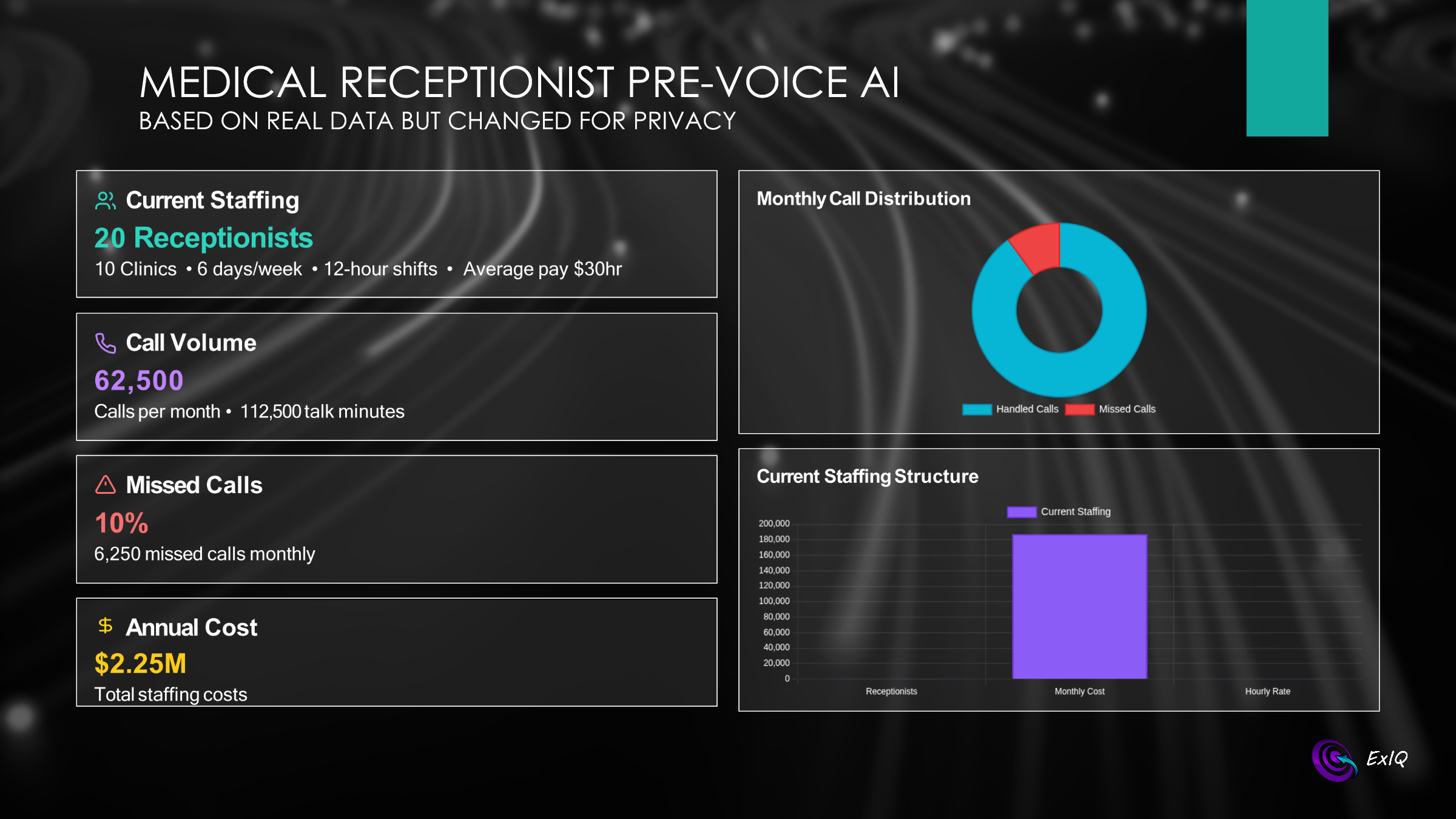
Calls were the front door to the medical group, but demand was outgrowing the reception model. Peak periods meant longer waits, abandoned calls and missed bookings, while staff repeatedly handled appointment changes, confirmations and clinician rescheduling.
The business case captured the scale: 62,500 calls each month, 10% missed-call exposure and A$2.25 million in annual reception cost. The opportunity was to answer more demand and complete more work from the first conversation.
Afreia connected the phone to the workflow—not another standalone bot.
Afreia was designed to answer naturally, understand intent and complete approved administrative work inside the systems the clinics already used. 3CX continued to manage telephony, Best Practice remained the source of patient and appointment data, and HotDoc continued confirmations and notifications.
- Book, cancel and reschedule approved appointment types.
- Verify identity before accessing or changing patient information.
- Answer routine service questions and support structured outbound calls.
- Transfer urgency, distress, uncertainty and explicit human requests early.
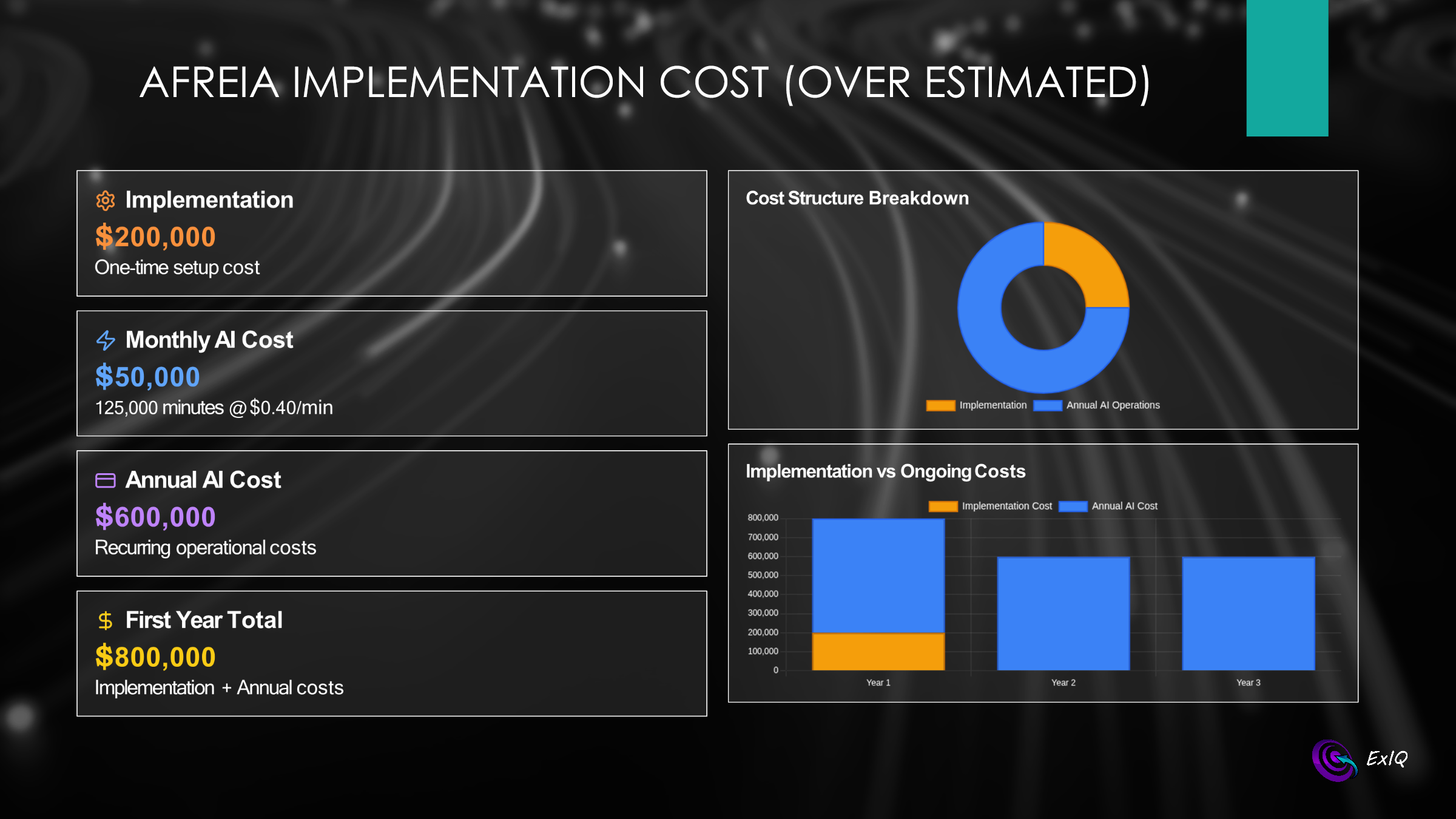
The first-year case included implementation and operating costs, giving leadership the full investment picture rather than a headline saving.
Automation handled the routine. People stayed available for the moments that matter.
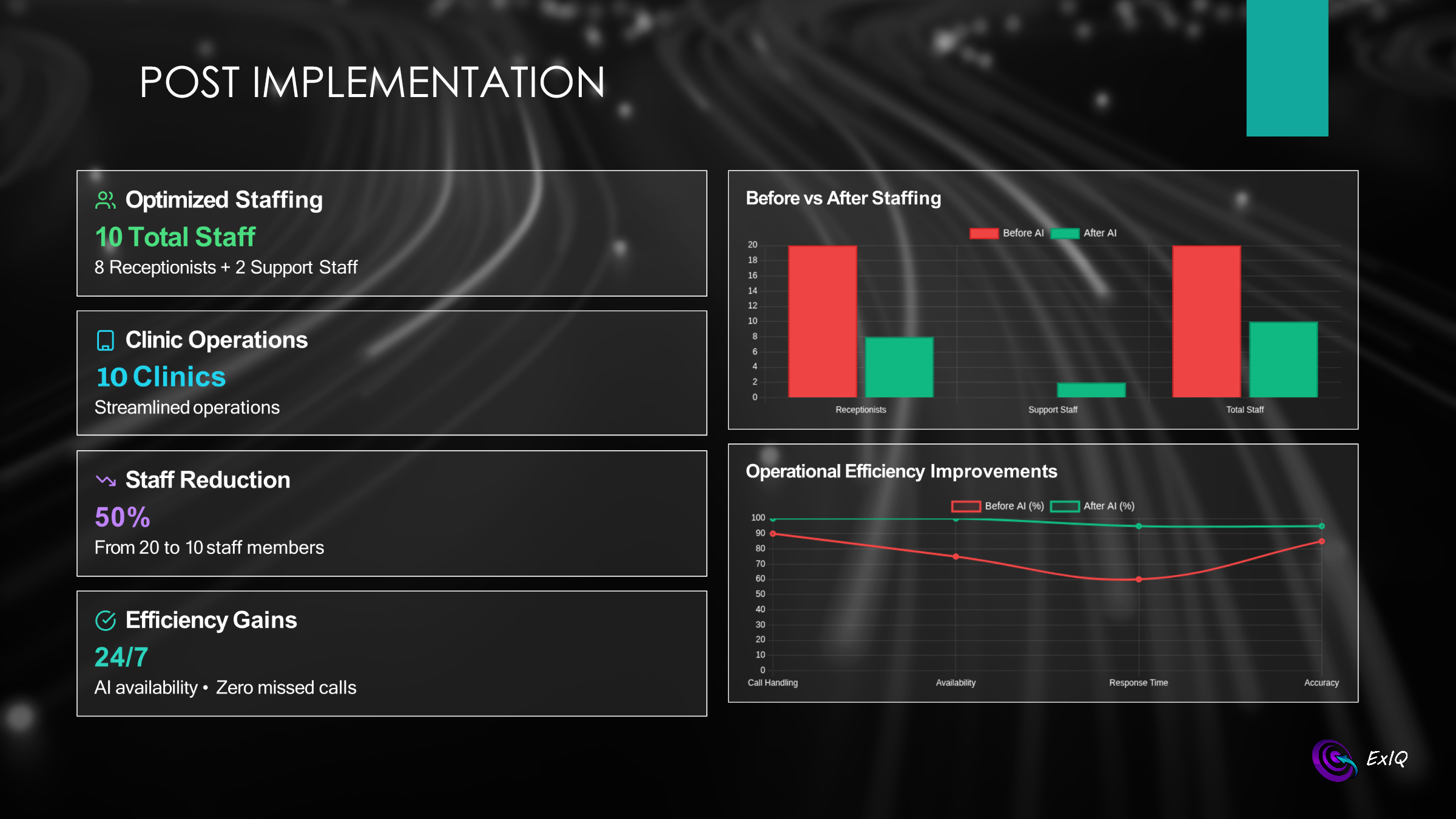
Routine demand could be completed immediately, while complex, urgent or sensitive interactions moved to people. Callers could request a person at any time, and if Afreia did not answer within ten seconds, 3CX routed the call to reception.
That combination created 24/7 front-line availability without losing the human path. Reception capacity could shift from repetitive administration to patients, exceptions and higher-value service.
The value came from two levers: lower service cost and recovered demand.
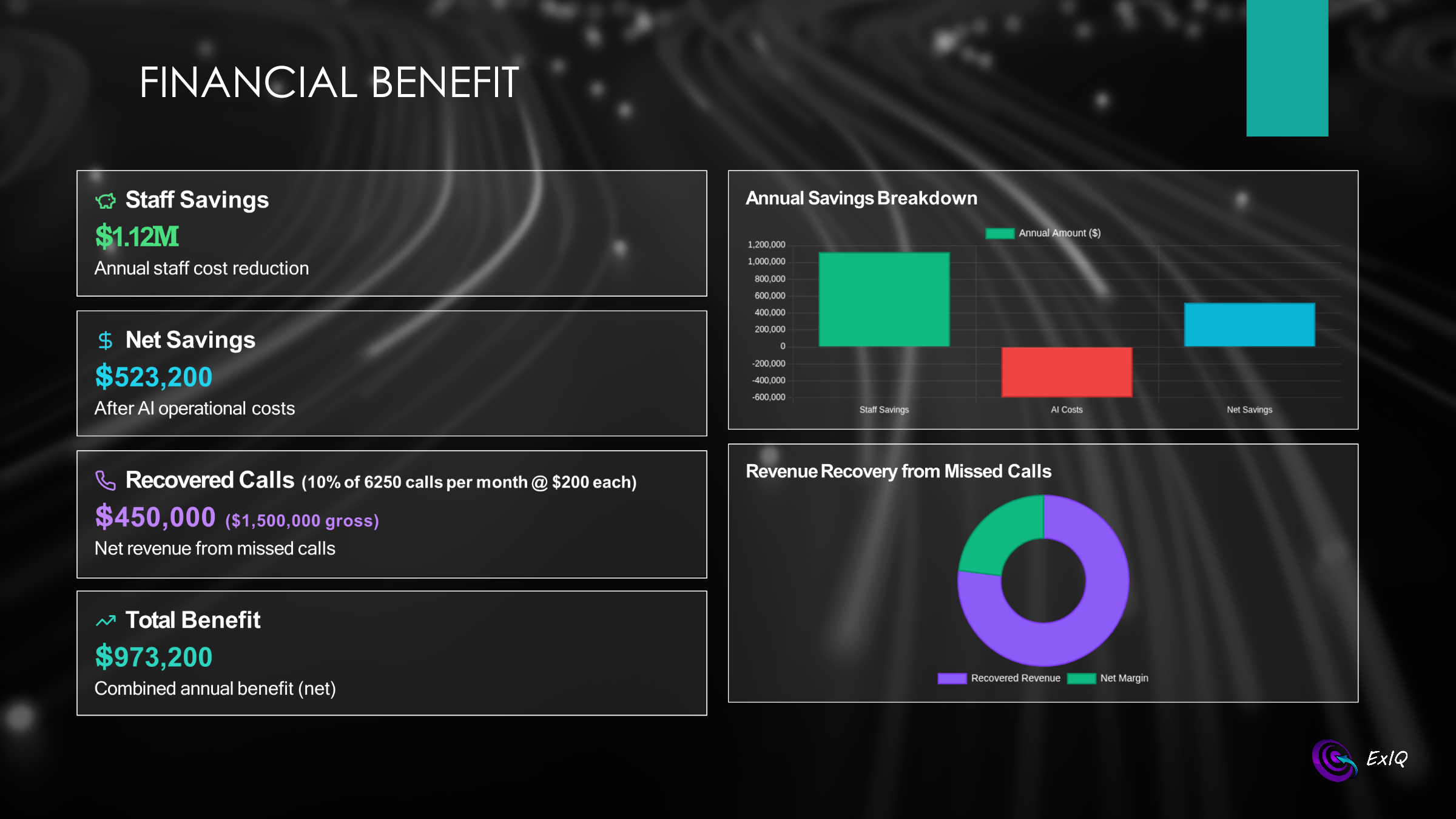
Using the group's operating figures, ExIQ tested both sides of the case. A redesigned service model produced A$1.12 million in annual staffing savings. After A$600,000 in recurring AI costs, net operating savings were A$523,200.
Recovering just 10% of missed calls at an average appointment value of A$200 added A$450,000 in net contribution. Together, the two levers created A$973,200 in annual benefit.
Combined annual benefitA$973,200
The numbers gave leadership a clear reason to move.
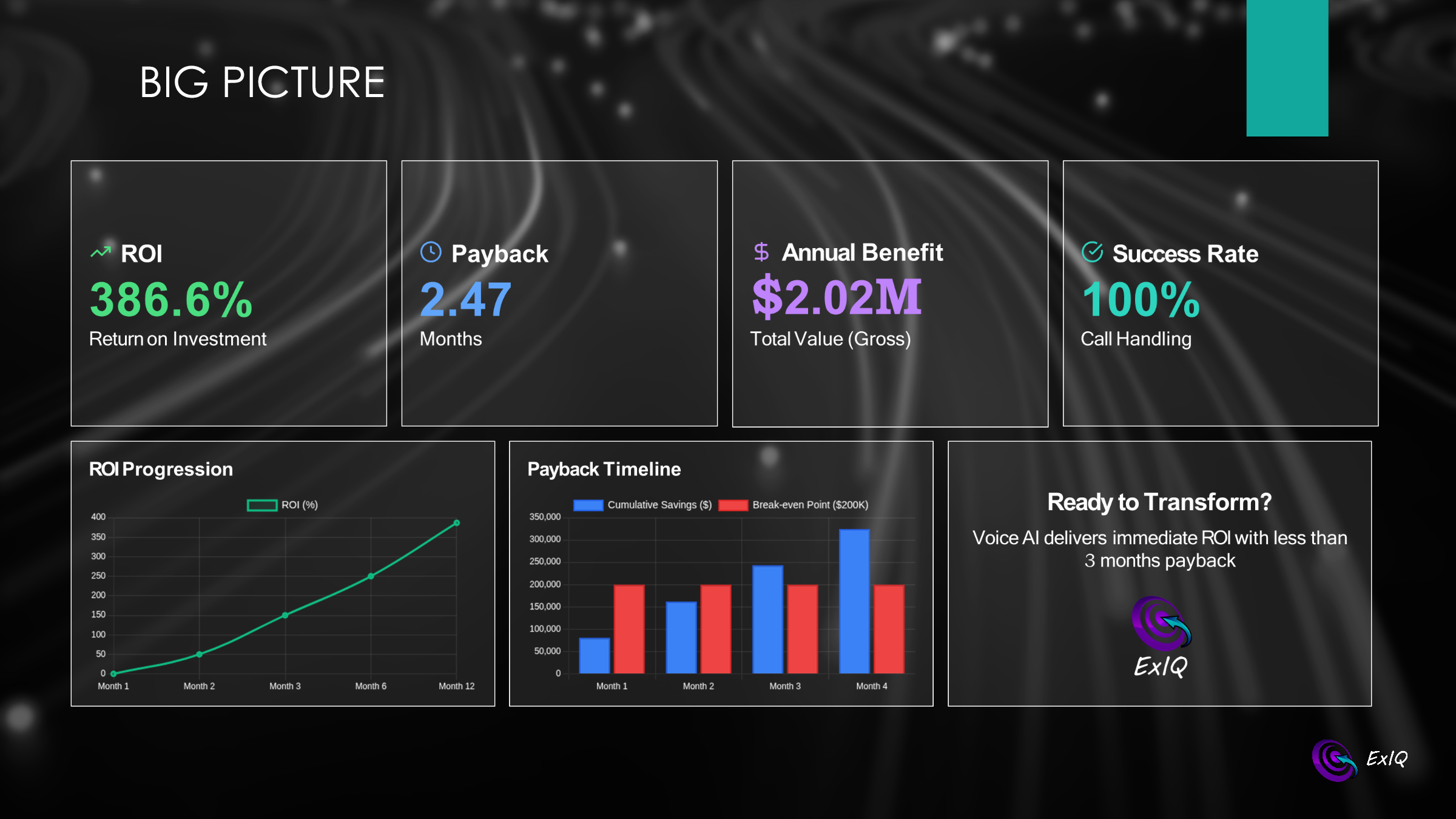
Against the full first-year investment, the commercial case delivered 386.6% ROI, a 2.47-month payback and A$2.02 million in annual value. The target service model also moved the organisation toward 100% call handling.
Instead of asking whether voice AI was interesting, leadership had a quantified opportunity, a practical operating design and a clear path from first clinic to network-wide scale.
Designed for live medical operations—not a technology demo.
ExIQ translated the commercial opportunity into clear product requirements, integration design, call flows, service controls, acceptance measures and a staged rollout plan.
- Connect telephony, booking and patient systems into one workflow.
- Protect urgent and sensitive interactions with immediate human escalation.
- Measure completion, transfers, wait times and missed demand.
- Roll out clinic by clinic and improve from live service evidence.
From a busy phone queue to a 24/7 digital front door.
ExIQ turned a service bottleneck into a scalable operating model and an investment case backed by real business figures: answer more calls, recover demand, release reception capacity and improve access across the clinic network.