AI Automation for Manufacturing

AI automation for manufacturers that need better flow, visibility, and operational control.

ExIQ helps manufacturing businesses identify and implement AI automation where it improves planning, reporting, admin load, workflow coordination, and operating decisions.

Manufacturing AI automation works best when it is connected to the real operating environment: planning, production, inventory, quality, maintenance, dispatch, finance, and customer commitments. The value usually comes from reducing friction around the factory floor rather than replacing the judgement required to run it.

ExIQ helps manufacturers find the practical AI opportunities that can be implemented with control. That may include reporting support, document handling, workflow triage, production administration, maintenance coordination, supplier communication, knowledge access, or integration between systems that currently require manual updates.

The goal is not an isolated AI experiment. It is a better operating system for the business: clearer information flow, less duplicated handling, faster decisions, and automation that respects uptime, quality, safety, and commercial performance.
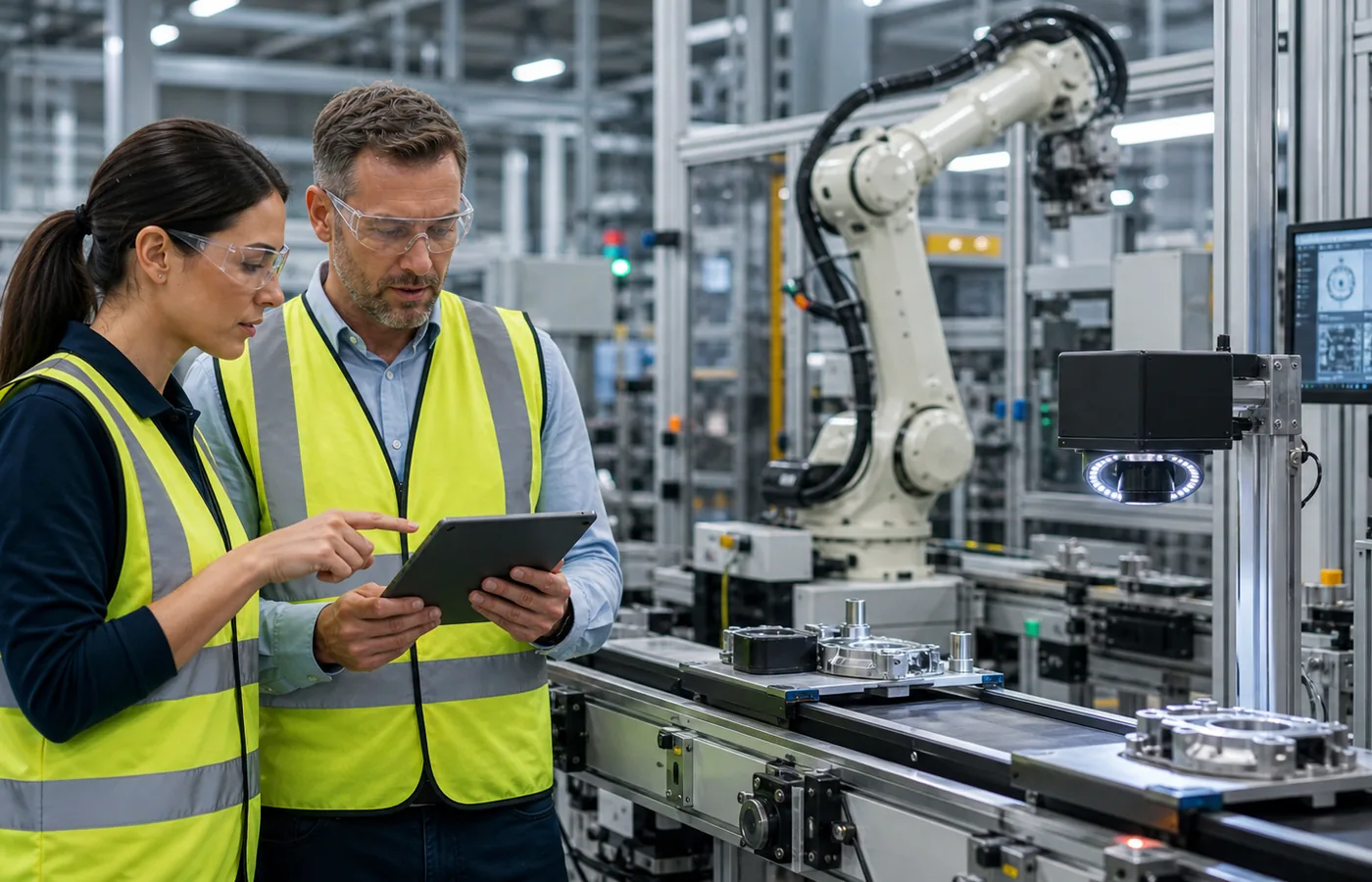
Manufacturing team reviewing AI automation opportunities across workflow and operations.
Where the friction sits

The useful work starts with operating reality.

ExIQ looks at the workflows, systems, data, handoffs, governance, and delivery constraints that decide whether transformation and AI work will actually land.

Fragmented operational information

Production, inventory, quality, maintenance, finance, and customer data often sit in different systems, which makes AI harder unless integration and workflow are addressed.

Manual reporting and admin load

Teams spend too much time collecting updates, preparing reports, chasing status, and turning operational activity into management information.

Unclear AI use-case value

Manufacturers can see AI potential but need a practical way to rank use cases by value, risk, data readiness, and operational impact.

Implementation risk around production environments

Any change that affects manufacturing operations needs careful staging, controls, and accountability so productivity improvements do not create new disruption.

How ExIQ helps

Practical support from scope to implementation.

The answer is rarely one tool. Most useful work combines operating design, systems thinking, integration, automation, governance, and senior delivery judgement.

Manufacturing AI opportunity mapping

We assess workflows, systems, reporting, and coordination points to identify where AI automation can reduce effort or improve decision timing.

Workflow-ready automation design

AI use cases are designed around real handoffs, approvals, data sources, escalation paths, and operational owners.

Systems integration and data flow

ExIQ helps connect the systems and information sources required for automation to work reliably instead of creating another disconnected layer.

Governance and staged implementation

We define controls, measurement, and rollout sequencing so AI automation can be tested and expanded with confidence.

Likely outcomes
  • Reduced manual effort in reporting, coordination, and administration
  • Better operational visibility across production and commercial workflows
  • AI use cases selected against manufacturing realities
  • Cleaner integration between systems and teams
  • More confident AI adoption without unnecessary production risk
FAQ

Common questions about AI Automation for Manufacturing.

Where can AI automation help manufacturers first?

Useful starting points include reporting, workflow triage, document handling, production administration, knowledge access, supplier communication, and operational coordination.

Does AI automation require replacing our ERP?

Not usually. Many opportunities involve improving workflow and integration around existing systems before considering broader platform replacement.

How do you avoid disrupting production?

Implementation should be staged around clear use cases, controls, test environments, human oversight, and operational owners before wider rollout.

Can AI help with manufacturing reporting?

Yes. AI can help summarise information, detect patterns, prepare reports, and support decision-making when the underlying data and process are reliable enough.